I Have Their Names
But not their stories, their voices, or the lives they lived.

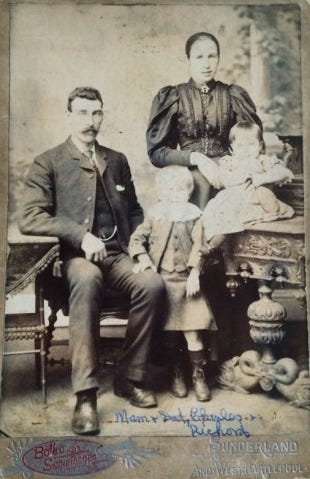
Researching genealogy is deeply satisfying. It connects us to our ancestors through the places they lived, the work they did, and the dates that mark their passage through life: births, baptisms, marriages, the birth of their children, and their deaths or burials.
There is something profoundly moving in tracing these fragments across centuries, piecing together lives from parish registers, census returns, and faded archival records.
Yet this process is also painstaking. I have spent countless hours, sometimes days, searching for one elusive individual, deciphering faded handwriting, and making careful guesses at names half lost to time. Still, every minute feels worthwhile, because each discovery brings me closer to those who came before me.
What I find far more unsettling is the silence surrounding the women in my family line. The voices of my grandmothers are almost absent from the historical record. They survive as little more than names attached to fathers, husbands, and children, with scarcely any trace of their own individual lives. These women carried families, shaped generations, and ultimately made my own existence possible yet history has left them voiceless.
It is that absence that compels me most; I want not only to find them, but to give them back the presence they were denied.
Recently, I came across an account of “The Mining Districts of Alston Moor, Weardale and Teesdale in Cumberland and Durham (1833) by Thomas Sopwith. His description of Teesdale women made me smile and squirm in equal measure, shaped as it is by the paternal lens of his time. Yet I was also struck by a quiet gratitude that he noticed them at all.
“The farms in High Teesdale are chiefly occupied by miners, and however rustic the outside of their dwellings, the interior not unfrequently presents an admirable specimen of neatness, cleanliness, and order. The strength of activity of the hardy race of men who inhabit them are often equalled by kindness of disposition; and no one who has experienced their civilities can readily forget them, or attribute them to any other source than a well-meaning mind. As to women, as Ledyard says, they every where were kind and attentive. In this district they are remarkably so. If it be pleasing to contemplate excellence in works of fiction, it is still more refreshing and instructive to witness it in real life. A comely matron presiding in a humble but clean and neat abode, - the mother of blooming and athletic children, - a form and countenance retaining much of the grace and vivacity of youth, - a ready smile at one bespeaking a hospitable welcome and a cheerful mind,--- manners free from awkwardness on one hand, and from forwardness on the other, and apparently regulated by the influence of real kindness and genuine good sense. Such is a rapid sketch of female character, drawn in the lonely wilds of Teesdale, and by the fidelity if the portrait was approved at the time by other and more competent judges than the artist.”
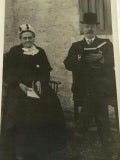
Through social history, I find myself trying to fill in the spaces between what is recorded and what is felt. To imagine lives that were lived fully, even if they were only partially written down. That is the real work, not just to find them, but to recognise them.
If I were to meet Thomas Sopwith today, I would thank him for noticing them and then gently remind him that they were more than what he chose to see.
I did consider writing out the names of my female ancestors’ generation after generation, and I can as I have them, but then I paused. Because those names are not truly their own. They are the names of their fathers, carried forward, and later replaced by the names of their husbands. This is the gap I find myself drawn to, not just to trace them, but to wonder they were beyond the names they were given.
This really captures a tension that sits at the heart of genealogy, the difference between knowing of someone and actually knowing them. The part about inherited names is especially powerful, because it shows how even identity itself was often recorded through someone else. It makes the act of researching them feel less like collecting facts and more like an attempt to restore something that was never fully written down in the first place.
I enjoyed this article — something is very gratifying about discovering and seeking to know those who came before us.